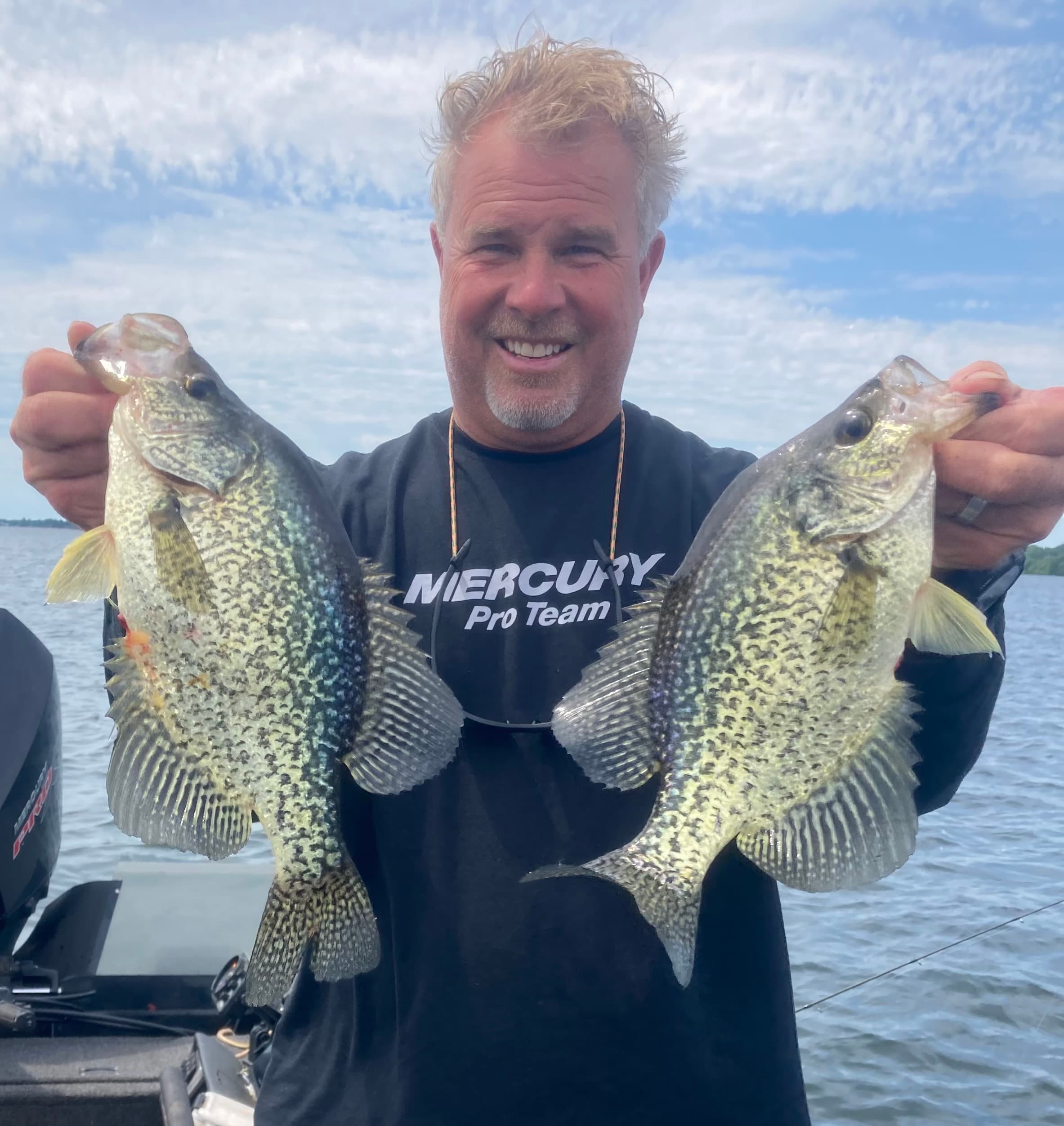

Forget the live sonar — steep breaks connecting deep water to shallow spawning bays are the key to loading up on late ice panfish.
Why Steep Breaks Matter
Weed flats, gradual weedy breaks, and sluggish paths to deep water can all equal loads of crappies or bluegills during certain times of the fishing season. But now one of the things that can collect a ton of fish are some of the steepest breaks in the lake. Especially the steepest breaks that connect late winter panfish spots directly to the spawning grounds they will be using to feed the minute the ice melts and then of course actual spawning once the water temps gain some ground.
The Perfect Late Ice Setup
When I'm heading out onto the ice in search of big quantities of late ice panfish I'm looking for the perfect combination of deep water late winter haunts and steep breaks adjacent to the areas where they will be spawning in 45–60 days.
- A shallow soft bottom spawning bay, 1–6 ft. deep
- Cattails along the edge of the bay
- Old or newly forming weeds on the bottom
- Adjacent deep water of 25–45 feet
- A break (drop-off) plunging at roughly a 45 degree angle
The steeper the angle, the more confined and condensed the school(s) of fish will be. And that folks is what creates a good competitive bite and solid fishing action — competition among the fish themselves.
How to Locate the Fish (Without Live Sonar)
The fish are easy to locate. I will write the next couple of paragraphs towards the folks that DO NOT have a live scope or sonar of any kind. So you will actually have to "hunt and fish" a little along with a little strategy — remember those days?
- Use a Vexilar transducer with no more than a 12 degree beam (9 is my favorite)
- Pick a depth and walk along the break, checking for fish about every 15 ft.
- Shoot through the ice using the old water on the ice trick
- Once fish are located, walk in a circle pattern around them to map the school's size
- Use the original fish you found as the center pivot point
Drill Strategy
Start by drilling holes just outside the perimeter of the school of fish — but around the schooling area. Drill the last few holes on top of the fish in the center of the school. The perimeter holes will be used as the school starts to possibly disperse due to noise and fishing activity.
The perimeter holes can also tell you which way the fish are moving by taking note of where the first and last fish are being caught. This is where it's handy to have 2–3 people with you. If you are alone, set up a few locators (electronics with "fish alarms") in the vacant holes — use them as electronic tip-ups. Set the alarm, wait for a beep, fish the hole. It's that simple. It's one reason to keep your "outdated" fishing sonar systems.
Keep Presentation Simple
I leave the minnows at home and use tiny ice jigs or tiny 1/10–1/16 oz. jigging spoons (my personal favorite) tipped with waxies or plastics. The fish are feeding and are usually not picky. Just keep it simple and small. Heavily schooled crappies or bluegills into the late ice period are typically aggressive due to the nutrients the newly formed eggs need. Lotsa Fish! Lotsa Fun!